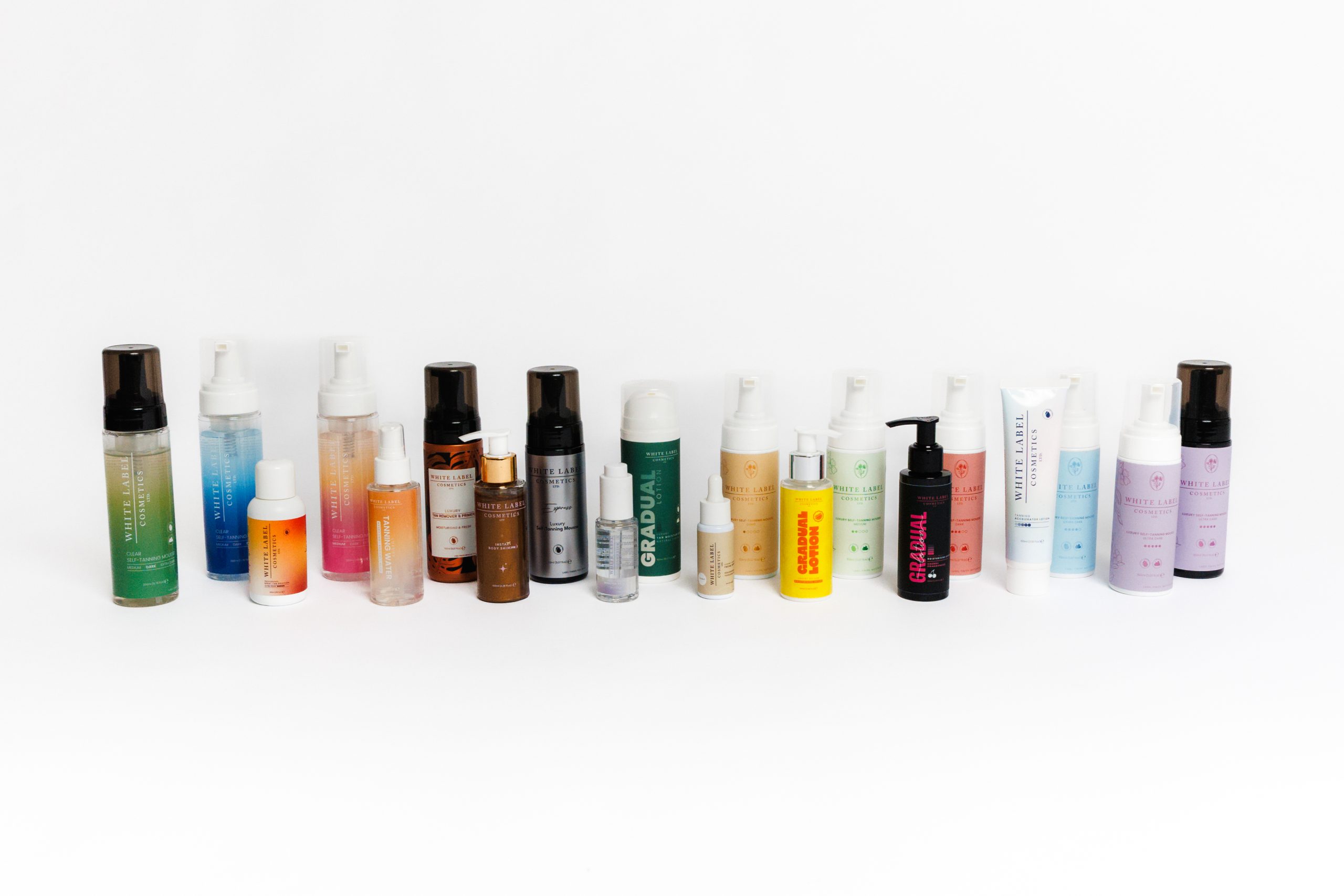
If you’re thinking about launching your own tanning range, starting your own brand could be easier than you think – especially with the right manufacturing partner.
Whether you are a beauty entrepreneur, influencer or existing business looking to expand, the self-tanning market offers plenty of opportunities. From tanning mousses to gradual lotions, you can build a range that reflects your style and appeals to your customers.
Here are the main points to consider when you create your own tanning brand.
Find your niche
Before choosing products, decide what makes your brand different. For example, you may choose to focus on natural-looking results, deep bronzed shades, vegan-friendly formulas or products that combine tanning with skincare.
A skincare-first range, for instance, could appeal to customers who want their tan to look good while keeping their skin feeling hydrated. Think about who will buy your products, what they can afford and what kind of beauty brands they already love. A strong identity will guide everything from formulation to packaging.
Choose your manufacturing model
One of the biggest decisions when you create your own tanning brand is whether to choose private label manufacturing or a custom formulation.
Private label and white label products use existing formulas developed and tested by specialist cosmetic manufacturers. You add your branding, logo and packaging, allowing you to bring products to the market without developing a formula from scratch. This is often the quickest, most affordable option for a new business. It can also mean smaller minimum order quantities (MOQs), making it easier to test demand before investing in more stock.
Custom formulation, on the other hand, gives you more control. You work with a laboratory to create a product around your own ideas, perhaps combining tanning agents with skincare ingredients such as hyaluronic acid or urea.
However, bespoke development usually costs more and takes longer. MOQs can be around 2,500–3,000 units or higher, depending on the manufacturer. For many first-time founders, private or white label can be a better place to begin.
Keep your first range simple
You don’t need a huge collection to launch successfully. Starting with two tanning mousse shades, such as medium and dark, gives customers a choice without tying up too much money in stock.
Add a complementary product, such as a tanning mitt or gradual tanner, and you have the beginnings of a coordinated collection.
Once you know what customers like, you can expand into facial tanning drops, exfoliators or other products to watch your brand grow.
Check safety and regulations
Cosmetic products must meet the requirements of the markets where they are sold. Most self-tanners use dihydroxyacetone (DHA), the ingredient that produces the temporary tanning effect.
In the EU, including Northern Ireland, DHA is limited to 10% in self-tanning products. Great Britain has its own cosmetic regulations, so check the rules for each market rather than assuming they are identical.
You will also need the appropriate safety documentation, including a Cosmetic Product Safety Report (CPSR) where required, and must follow product notification and labelling rules. An experienced manufacturer can help you navigate these steps.
Design packaging that stands out
Your packaging should suit your brand and make important product information easy to find. Consider colours, fonts, bottle shapes and labels that work well together.
A graphic designer can create a distinctive look while helping with initial concepts. Depending on how confident you are, you can also do this yourself by using online tools like Desygner.
Make sure labels include required information, including ingredients and relevant warnings. Clear labelling is important to customers who want to understand what they’re putting on their skin.
Plan your launch
Now for the exciting bit! Once everything is ready, introduce your products through social media, video demonstrations, professional product photography and partnerships with suitable creators. Show customers how the products work and what makes your range different.
Starting small lets you learn what sells, collect feedback and grow at your own pace. Add a strong identity, reliable formulations and well though-out packaging, you can turn your idea into a tanning brand customers return to.